Building a “cool” product is easy. Building a useful one is hard.
In the world of Augmented Reality (AR), many companies create impressive prototypes that never actually get used. They fail because the technology feels like a toy rather than a tool that solves a real business problem.
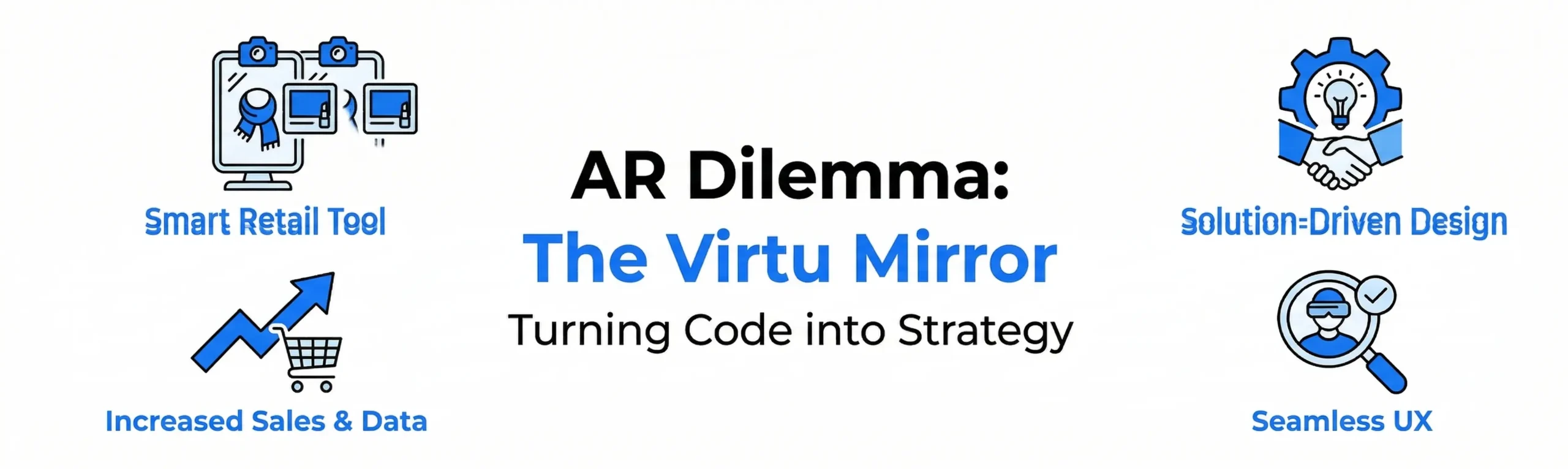
When Virtu created Vivid, a “Smart Mirror” that uses AR to let people virtually try on products, they had the technical hardware ready. But to make it a success in high-end retail, they needed more than just a screen and a camera. They needed a plan to make it fit into a shopper’s journey.
The Challenge: Why Shoppers Ignore New Tech
Most people have seen “magic mirrors” in malls that don’t work well. They are often slow, the digital clothes don’t line up with the person’s body, or the screen is too confusing to use.
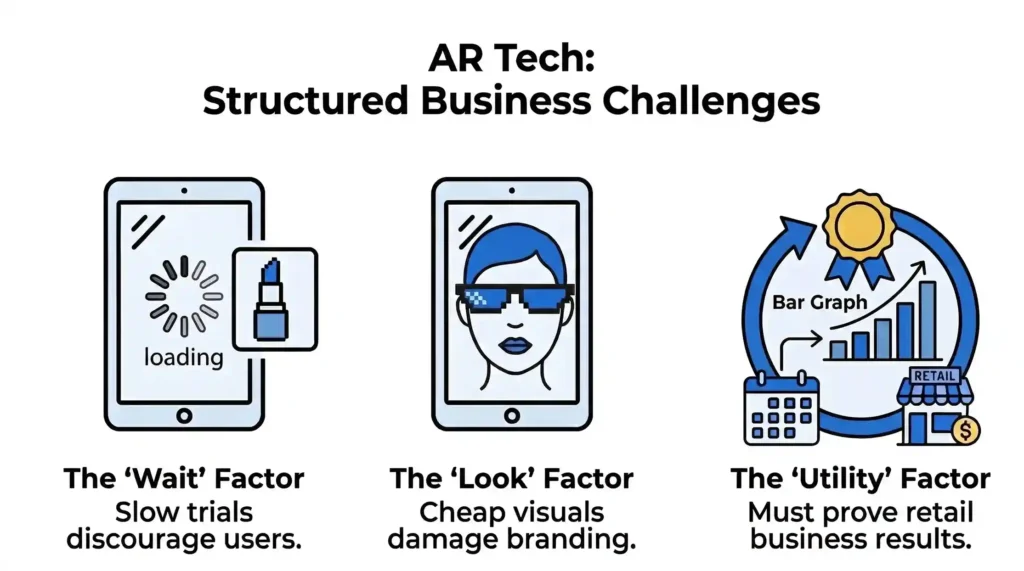
For Virtu, we had to solve three specific problems:
- The “Wait” Factor: If a virtual try-on takes longer than just picking up a physical lipstick or scarf, a customer will walk away.
- The “Look” Factor: In luxury stores (like high-end fashion or cosmetics), everything must look perfect. If the digital image looks “cheap” or pixelated, it hurts the brand’s reputation.
- The “Utility” Factor: The store owners needed a reason to buy the mirror. It couldn’t just be for show; it had to help them sell more products.
How Nuclay Solved the Problem
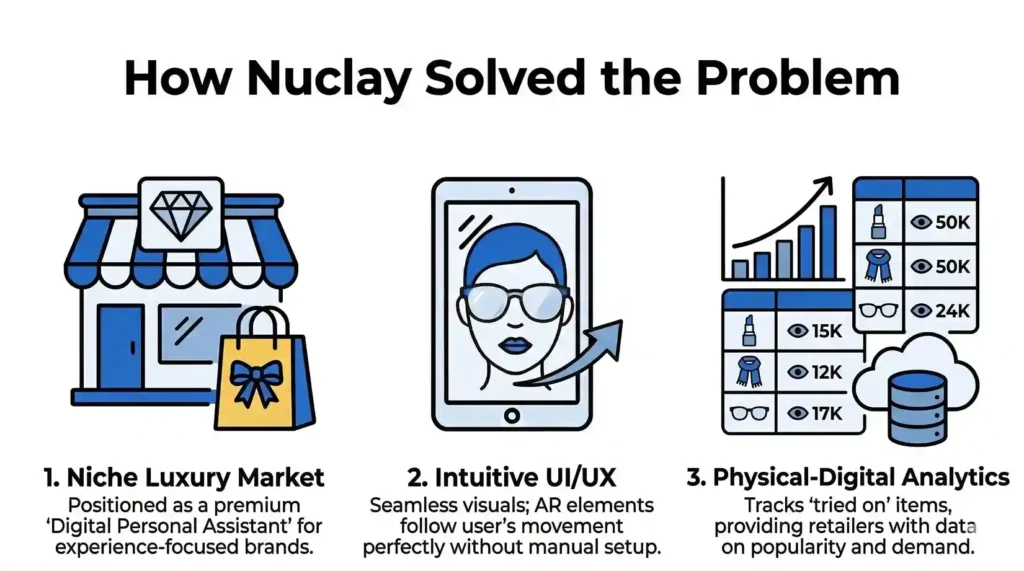
Nuclay Solutions partnered with Virtu to move the mirror from a “tech experiment” to a “business solution.” We focused on three main areas:
1. Picking the Right Customers
Instead of trying to sell the mirror to every store, we focused on niche, luxury sectors. These brands care deeply about “experience.” By positioning the Vivid mirror as a premium way to interact with customers, we gave it a clear identity. It wasn’t just a mirror; it was a “Digital Personal Assistant” for the shopper.
2. Designing an Easy Interface (UI/UX)
We designed the way people interact with the mirror to be as simple as possible.
- No Manual Required: You don’t need to be “tech-savvy” to use it. You just stand in front of it and move.
- Seamless Visuals: We ensured the AR elements (like a pair of glasses or a shade of makeup) followed the user’s movement perfectly. If the user turns their head, the AR product turns with them instantly.
3. Connecting the Physical to the Digital
A regular mirror doesn’t tell a store manager anything. The Vivid mirror, however, tracks data. We built the system so it could tell the retailer which items were “tried on” the most. This gives store owners the same kind of data they get from their websites, showing them what is popular even if it hasn’t sold yet.
The Result: Better Engagement and Better Data
By combining Virtu’s hardware with Nuclay’s digital strategy, the Vivid mirror became a powerful tool for retail brands.
- Customers stay longer: People enjoy the interactive experience, which keeps them in the store for a longer time.
- Modern Branding: It makes the brand look high-tech and forward-thinking.
- Smart Business: Retailers can use the data from the mirror to decide which products to stock or put on sale.
Strategy First, Code Second
The Virtu project proves that good code isn’t enough. You can have the best AR software in the world, but if it doesn’t have a clear purpose and an easy design, it won’t be used.
At Nuclay Solutions, we specialize in taking complex technology and making it simple, useful, and profitable for businesses. We’ve done this across 80+ projects because we know that the “why” is just as important as the “how.”
Strategy First. Code Second.
With 80+ projects delivered, we bridge the gap between complex code and real-world business results.
Discuss Your Project Strategy